
Welcome to the Lake Superior College Nursing Program!
We are glad you are here. This handbook will guide you through your program.
This Nursing Student Handbook has been designed to help guide you through your selected nursing program. It includes essential information about courses, lab and clinical expectations, and student responsibilities. Please keep this handbook and refer to it throughout your program.
Students are accountable for current information in both the LSC Student Handbook and this Nursing Student Handbook. All program and policy changes will be communicated through your LSC email. Any program policy changes supersede previous policies. Nursing policies supersede general college policies where applicable.
We welcome you to our program and look forward to working with you!
 |
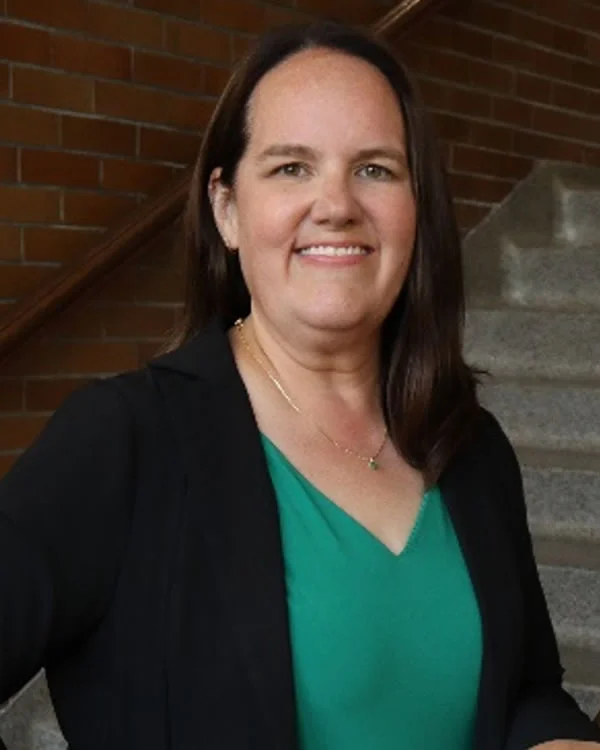 |
| Tracy Moshier, MSN, RN | Kristen Fenlason, Ed.D., MS, RN, CNE |
| Practical Nursing Program Director and AS Nursing Faculty | AS/AST Professional Nursing Program Director |
Updated: 05/18/2020 · 10/15/2021 · 09/06/2022 · 02/27/2023 · 08/30/2024 · 07/10/2025 · 05/19/2026
Creating and Maintaining a Climate of Professional Nursing
Welcome to the Nursing Program at Lake Superior College
Choosing to pursue a nursing education is both meaningful and demanding. You have joined a rigorous program that requires commitment, focus, and preparation. The nursing faculty at Lake Superior College are dedicated to supporting your academic success and helping you achieve your professional goals. You are a valued member of our nursing community — your input matters. Student feedback strengthens our program and is welcomed through course and program evaluations, as well as direct communication with faculty, the program director, or the division dean.
We are committed to fostering a learning environment where every student can thrive. We value:
- Clear, well-organized courses with transparent expectations.
- Learning experiences that are engaging, challenging, and thought-provoking.
- A diverse, inclusive, and respectful community.
- A safe space for open dialogue and shared perspectives.
As students, you play a crucial role in shaping the learning environment. To support a culture of respect and excellence, we encourage you to:
- Arrive prepared and be fully engaged in classes and clinicals.
- Listen actively and contribute meaningfully to discussions.
- Embrace diverse perspectives and challenge assumptions.
- Offer and receive feedback with professionalism and openness.
- Treat everyone in our community with respect and civility.
- Represent the nursing profession with integrity and pride.
Together, we aim to create an environment that supports your academic, personal, and professional growth.
Lake Superior College Resources
The following are some of the resources available to assist you on campus. We believe in following the vertical chain of command — please begin by working with your assigned faculty member before escalating concerns. It is rare that your first contact would be the LSC president.
| Faculty Member | Your first point of contact for course, clinical, or grade concerns. |
|---|---|
| Nursing Program Director — AS/AST | Kristen Fenlason, Ed.D., MS, RN, CNE. Meet with the program director after speaking with your instructor. The director can assist with time management concerns, classroom issues, Kaplan, grade review, withdrawal, Degree Audit Reports (DAR), course substitutions, and general program questions. Email the program director with curriculum or clinical questions. |
| Nursing Program Director — Practical Nursing | Tracy Moshier, MSN, RN. Meet with the program director after speaking with your instructor. The director can assist with time management concerns, classroom issues, Kaplan, grade review, withdrawal, Degree Audit Reports (DAR), course substitutions, and general program questions. Email the program director with curriculum or clinical questions. |
| Dean of Allied Health and Sciences | Anna Sackette-Urness Meet with the Dean if concerns have not been resolved after speaking with your instructor and program director. If you have a conflict with a faculty member, speak with them first, then the Dean if it remains unresolved. |
| Administrative Assistant, Allied Health | Missy Lancour. Can assist with onboarding items, including immunizations, background checks, BLS/CPR. A great first stop if you are unsure who to contact. |
| Clinical Coordinator | Kristen Fenlason, Ed.D., MS, RN, CNE. Assists with onboarding and clinical experiences at Essentia and Aspirus. Please respond promptly to her emails — they are always time-sensitive. |
| Simulation and Lab Coordinator | Jacqueline Semaan. Resource for skills, labs, lab supplies, and simulation questions. |
| Dean of Students | Wade Gordon |
| D2L Brightspace | “Resources for Nursing Students” shell contains the Student Handbook, forms, and program information. |
| Academic Advisor | Assists with schedule planning and Degree Audit Review (DAR). |
| Financial Aid | Speak with financial aid before withdrawing from any course. |
| Accessibility Services | Supports students with extended test time, quiet testing environments, and more. Contact early in the semester. |
| Counseling Services | Free and available to all students. Contact Amy Fullerton. |
| Tutoring and Learning Center (TLC) | Study room reservations, math and science tutoring, reading and organization support, peer nursing tutoring, and English as a Learned Language (ELL) resources. Visit the TLC. |
| Library | Study resources, study room reservations, and completion of library-related assignments. Visit the Library. |
| Center for Equity and Inclusion | Strives to be inclusive and respectful. If you notice microaggressions, discrimination, or exclusion, please speak with your instructor, program director, dean, or dean of students. Also offers an open-access food shelf and emergency funds. Visit the CEI. |
Resources Specific to Nursing Students
LSC Nursing Honor Society Chapter — Alpha Delta Nu (ADN)
Lake Superior College is part of the Organization for Associate Degree Nurses (OADN). This organization has a student chapter, Alpha Delta Nu (ADN), with specific membership requirements. The chapter focuses on personal and professional growth, leadership, and community service.
LSC Nursing Club
Lake Superior College has a nursing club that welcomes all nursing students. This club emphasizes community, belonging, personal and professional growth, leadership, and service.
Nursing Peer Tutors
Through the Tutoring and Learning Center (TLC), nursing students may schedule time with nursing peer tutors. Peer tutors are students who have completed the first two semesters of the nursing program and work as paid student employees. While there are no tutors specifically designated for the PN program, PN students are welcome and will likely find peer tutor support beneficial.
LSC Department of Nursing Policies Manual
The Nursing Student Policy Manual contains 14 policies specific to nursing students, covering topics such as admissions, grading, clinical attendance, academic progression, and more. Students are responsible for understanding and following all policies in the manual.
Definitions and the NCSBN Clinical Judgment Model
Key Definitions
Clinical Judgment is defined as the skill of recognizing cues in a clinical situation, generating and weighing hypotheses, acting, and evaluating outcomes to achieve a satisfactory clinical outcome. Clinical judgment is the observed outcome of two underlying mental processes: critical thinking and decision making.
Problem-Solving involves developing and evaluating interventions to resolve complex problems in nursing.
Critical Thinking involves using logic and reasoning to identify the strengths and weaknesses of alternative healthcare solutions, conclusions, or approaches to clinical or practice problems.
NCSBN Research Findings
According to National Council of State Boards of Nursing (NCSBN) Next Generation research, clinical judgment was linked directly to more than 46% of tasks performed by entry-level nurses, while problem-solving and critical thinking were each linked to more than 30% of tasks performed by entry-level nurses.
Nursing Program Curricular Framework, Mission, and Philosophy
Mission
The Lake Superior College Department of Nursing is committed to preparing competent entry-level nurses who are accountable for delivering safe client care through clinical decision-making, nursing actions, and professional behavior.
Philosophy
The Lake Superior College nursing program believes nursing is both a science and an art, with distinct knowledge, skills, values, and ethics. The nursing faculty supports Lake Superior College’s mission, vision, and values to prepare a skilled workforce for the future. The nursing program aims to empower students to reach their fullest potential through evidence-based, innovative, student-focused learning. We seek to train nursing students to become practice-ready and to work and thrive in an evolving healthcare world.
In addition to aligning with the college’s mission, the philosophy and curricular framework reflect the National League for Nursing (NLN) competencies for nursing education, Quality and Safety Education for Nurses (QSEN) competencies, National Council of State Boards of Nursing (NCSBN) objectives, and the Minnesota State Board of Nursing scope of practice.
Nursing faculty are educationally and experientially qualified for their roles and actively maintain expertise through professional development. Faculty work collaboratively toward a common goal and vision. New faculty are actively mentored. Faculty support student learners in developing the knowledge, skills, and attitudes necessary to become entry-level nurses.
Student policies and services have been designed to support student growth, attainment of end-of-program student learner outcomes and foster the goal of lifelong learning. Student feedback is vital to the program’s success and ongoing improvement. Student representatives serve on nursing faculty committees and are surveyed throughout the program, upon graduation, and after graduation. Diverse stakeholder voices are actively sought in program implementation and quality improvement.
The nursing curriculum’s theoretical framework incorporates principles of adult learning and Benner’s Novice to Expert Model, building on students’ previous didactic and experiential knowledge. Tanner’s Clinical Judgment Model guides the development and application of clinical judgment and reasoning. For simulation, the program has adopted Jeffries’ Simulation Theory and follows INACSL Simulation Standards. Learning experiences in the classroom, lab, and clinical settings all strive to synthesize learning and bring the clinical experience to life — preparing students to think and act like nurses.
Culturally responsive pedagogy is instrumental in making students feel welcome and included and in preparing future nurses who are culturally informed regarding diversity and social determinants of health. We aim to nurture a professional and respectful environment where students feel valued, appreciated, and included, and where their opinions, needs, and experiences matter. Faculty strive to foster curiosity and appreciation for differences. It is our desire that LSC nursing graduates uphold the profession’s ethics and values while advocating for every patient’s inherent worth and dignity, with the goal of delivering quality care and improving healthcare outcomes for all.
Program Values
- Collaboration and Teamwork
- Quality Improvement
- Diversity, Equity, Inclusion, and Belonging
- Evidence-Based Practice
- Clinical Judgment
- Professionalism
Last reviewed: May 19, 2026
End-of-Program Student Learner Outcomes
Last Reviewed: Fall 2024
Practical Nursing
- Demonstrate an awareness of diversity and inclusion, respecting and valuing diverse perspectives, backgrounds, and experiences.
- Employ clinical judgment in client care situations to ensure healthcare quality and safety.
- Collaborate in supporting client care through the utilization of information technology.
- Communicate professionally and work collaboratively to enhance client outcomes.
- Operate within the scope of practice for the practical nurse following legal, ethical, and regulatory frameworks.
Associate Degree Nursing
For Students Starting Fall 2025 and Beyond
- Integrate culturally sensitive practices by demonstrating cultural humility, respect, and inclusive practices.
- Implement clinical judgment by assessing client conditions and synthesizing data to provide safe, effective, client-centered care.
- Employ information literacy skills to enhance client care and professional practice.
- Collaborate with clients, their support systems, and the healthcare team to improve client health outcomes.
- Operate within the scope of practice and regulatory framework for the professional nurse.
For Students Who Started the Program Before Fall 2025
- Adapt to the diverse and evolving roles of the professional nurse.
- Provide safe and effective evidence-based care to clients in all stages of development at any point on the health/illness continuum.
- Utilize clinical judgment to meet the healthcare needs of diverse populations.
- Collaborate and interact effectively with clients and members of the healthcare team.
- Uphold the ethics and values of the nursing profession while advocating for the client’s inherent worth and dignity.
- Evaluate outcomes of care processes to continually improve the quality and safety of healthcare systems.
Lake Superior College College-Wide Outcomes
As a result of their studies at Lake Superior College, students will gain knowledge and demonstrate a variety of skills, including foundational knowledge through study in career-focused programs and the liberal arts and sciences. Students will also have opportunities to demonstrate:
I. Professional and Personal Responsibilities
Demonstrated through appropriate behaviors in a variety of contexts across class and campus experiences. Examples include:
- Professional demeanor
- Initiative and accountability
- Adherence to organizational expectations
- Self-development and lifelong learning
II. Intellectual and Practical Skills
Practiced extensively across educational experiences in the context of progressively more challenging problems, projects, and standards. Examples include:
- Critical and creative thinking
- Information literacy
- Inquiry and analysis
- Quantitative literacy
- Synthesis and application
- Teamwork and problem solving
- Written and oral communication
III. Social Responsibilities
Anchored in active involvement with diverse communities and real-world challenges. Examples include:
- Awareness and practice of sustainability
- Civic involvement
- Ethical reasoning and action
- Intercultural competence
Registration Procedures
All nursing classes have controlled registration. It is your responsibility to ensure there are no restrictions (including clinical requirements) attached to your registration privileges. A nursing schedule will be sent to you via your LSC email. You must register each semester. Only students admitted to the nursing program and in good academic standing may register for nursing classes.
Check the course schedule for payment deadlines. This will prevent you from being dropped from courses due to non-payment.
Online Registration Instructions
Note: You are assigned to groups to keep all lab and clinical sections even.
- Go to lsc.edu/services.
- Enter your StarID and password, then click Login.
- Click on Courses & Registration.
- Select the semester.
- Find Practical Nursing (NUPN) or Professional Nursing (ADN).
- Click ALL courses, find your assigned classes, and add them to your Wishlist.
- Select the courses to register and enter your password to confirm.
Important: Do not register for any sections other than those on your registration sheet. Registering for the wrong section prevents other students from accessing their proper sections.
Program Communication
Student and Faculty Communication
All nursing faculty and program support staff are available via LSC email. Faculty can be found in the online directory. The response time for faculty emails is 72 hours. Faculty mailboxes are located in the campus mailroom on the second floor. All instructors’ post office hours, and appointments can be made via email.
Do not report clinical absences via email. Follow the specific communication instructions provided by your clinical faculty.
D2L Brightspace
Most nursing courses have a D2L Brightspace component. Assignments, course materials, grades, and announcements are accessed through D2L.
Student Email Accounts
All nursing students are required to activate a college email account. This service is provided at no charge. Email is the official means of communication for nursing programs. Course information, clinical assignments, program announcements, and registration information are frequently sent via email.
Students are responsible for all information sent to their LSC email and are expected to check accounts daily. Emails sent from personal accounts will not be acknowledged.
Name, Address, or Phone Number Changes
Students who have legally changed their name must present legal proof of the change to the Records Office and the Nursing Program Administrative Assistant within two weeks of the legal action. Changes to phone numbers and addresses must also be submitted to both offices.
Note: The post office does not forward mail from LSC to a new address — it is returned to LSC and a hold may be placed on the student’s record.
Third-Party Academic Resources
Kaplan
Kaplan is included in course fees and is not a separate purchase. Students are responsible for contacting Kaplan directly if they have a name change — LSC staff cannot do this on their behalf. No code is needed to access Kaplan. An invitation is sent to your LSC email once student lists are submitted to Kaplan.
You remain in the Kaplan system until you withdraw, graduate, or retake a course that does not use Kaplan. Kaplan is attached to the course fees for one course per semester. If you repeat a course that uses Kaplan and the fee is not attached, you will need to complete a form with the program director and the business office to pay the fee.
Lippincott Resources
Faculty assign Lippincott tasks that are accessible only during your subscription period. Starting Fall 2026, Lippincott resources will be included in course fees and will not be purchased separately. The total price is divided across semesters. Students who started the program before Fall 2026 will need to purchase Lippincott resources through the LSC bookstore.
You will have access to the program’s online resources and may download books for as long as you like. However, certain features of the online product — such as DocuCare — are not accessible beyond the duration of your purchased subscription.
Student Participation in Faculty, Advisory, and Curriculum Committee Meetings
The nursing faculty will request student volunteers from each nursing cohort to participate in faculty and advisory committee meetings throughout the year. One student representative and one alternate will be selected from each cohort. If more than two students volunteer, faculty will determine which students will represent the class.
The purpose of student participation is to give students a voice at faculty and advisory committee meetings. Student representatives are asked to bring forth class concerns and to return information from meetings to their classmates.
Student Representative Responsibilities
- The Director of Nursing will notify student representatives of upcoming faculty and advisory committee meetings via Microsoft Outlook.
- Curriculum Committee leaders will notify student representatives of upcoming curriculum meetings.
- If a student representative is unable to attend a meeting, they must contact the alternate to attend in their place.
- Student representatives bring forth concerns from their cohort. Please discuss topics with fellow students before the meeting.
- Email the Director of Nursing with concerns before the scheduled meeting and attempt to propose a solution.
- After the meeting, report back to your cohort in a way that reaches all students.
- Student representatives are not to represent individual student concerns or performances (e.g., representing a student who has failed a skill or course).
- Interested students must complete the student representative application form, available on the Nursing Student Resource D2L Brightspace page.
Student Responsibilities
LSC Statement of Non-Discrimination
Lake Superior College is an equal opportunity educator. All persons are eligible for enrollment regardless of race, sex, color, creed, religion, age, national origin, disability, marital status, status with regard to public assistance, sexual orientation, or membership or activity in a local commission.
LSC Department of Nursing Policies Manual
Please review the Lake Superior College Department of Nursing Policies 2026–2027 Manual for all program-specific policies including admission, grading, clinical attendance, academic progression, and more.
Substance Use and Abuse
Students are held to the LSC Drug and Alcohol-Free Campus Policy. Symptoms of alcohol and/or drug use will result in immediate dismissal from the classroom, lab, or clinical site. This includes THC, hemp, and delta-derivatives products.
Attendance
Nursing program attendance policies are based on standards expected in the healthcare industry. LSC is preparing you for the workforce.
Attendance is expected in all classes, labs, and clinical experiences. Promptness is an essential aspect of professional behavior. Absences should be reserved for serious illness or emergencies. Whenever possible, schedule outside appointments around your school schedule.
Class and Lab Attendance
- Attendance is recorded in compliance with LSC policy. Attendance and punctuality are critical to success in the program.
- It is the student’s responsibility to arrange to make up missed classroom or lab content.
- Lab courses require that the student make up any missed skills completed during an absence.
- Late Assignments: Notify the instructor if you have had a medical, health, or family issue and would like an extension. Deadline extensions are not available for disorganization or forgetting to complete an assignment. No late assignments may be submitted once finals week has started.
- For clinical attendance, please review Policy 7.0 — Clinical Attendance.
Employment While Enrolled
Many students hold part-time jobs while attending the program. School must be your primary priority while enrolled. Faculty and administration recommend working no more than 24 hours per week. Each student should individually assess the balance between work, family, and school. No special consideration will be given for work conflicts or mandatory scheduling. If you are subject to mandatory scheduling, arrange your work schedule around classes and clinicals.
Lake Superior College Student Responsibilities
The following institutional responsibilities apply to all LSC students:
- Assessment. Students may be required to participate in college-wide assessment activities, including course or instructor evaluations, testing, or special assignments.
- Student Conduct. Charges of academic misconduct will be brought to the student’s attention, and disciplinary action may be taken. See LSC Student Code of Conduct, Procedure 3.6.1, Part 6.
- Non-attendance. Students are expected to regularly attend enrolled courses. Instructors report students in non-attendance, who may be assigned a grade of FN (Failure for Non-attendance). An FN may be changed to a W before the final withdrawal date. See LSC Procedure 3.17.4.
- Withdrawal. The final date for official course withdrawal is the date on which 80% of the instructional days have elapsed. A grade of W will appear on the transcript. For short-term courses, the deadline is similarly based on 80% of instructional days elapsed.
- Computer Skills. Students must be proficient in basic computer use, word processing, email, and internet navigation. See an advisor for referral to the appropriate course or resource if needed.
- Student Success Day and Career Expo. Upcoming dates: September 30, 2026, and March 23, 2027. All students are strongly encouraged to participate.
Additional Related Information
- Accommodations. Students with a documented disability that may affect performance are encouraged to contact the College’s Accessibility Coordinator, S155, at (voice) or (MRS/TTY) at the start of the semester. All discussions are confidential.
- Tutoring. Free tutoring in many subjects is available at the Tutoring and Learning Center (L170). Stop in or call . View current schedules.
- Military Service and Disabled Veterans. Students unable to complete the semester due to a call to active duty or a service-connected disability are entitled to appropriate accommodations. See MinnState Procedure 5.12.1.
- Diversity, Equity, and Inclusion. LSC values equity and diversity and is committed to an inclusive learning environment. No person shall be discriminated against based on race, sex, color, creed, religion, age, national origin, disability, marital status, status with regard to public assistance, sexual orientation, gender identity, or gender expression. To discuss concerns, contact Executive Diversity Officer Sarah Lyons, M125, , . See LSC Policy 1B.1.
- Library. Visit Erickson Library online or on campus. Electronic resources include eBooks, journal articles, and streaming media. Off-campus access requires your StarID and password. Schedule time with a librarian through online chat 24/7 or by appointment. Questions: or .
- Supporting Basic Needs. If you are experiencing challenges with food, housing, childcare, finances, mental health, or technology access, text “MNHELP” to 898-211 (TXT211) to connect with a trained specialist 24/7/365. Learn more at the Supporting Basic Needs webpage.
Updated: May 2026
Student Records
Student academic and classroom management records are maintained in accordance with Minnesota State policy (see the LSC Student Handbook). Student files containing onboarding requirements — including health records, immunization records, CPR certification, and background study results — are stored in a secure database. Written course evaluations, student contracts, and release-of-information requests are kept in the nursing office while the student is enrolled and for one year after graduation.
Restrictions for Disclosing Student Information
In general, the nursing program and staff may not disclose personally identifiable information from a student’s or applicant’s records without the student’s written consent. This includes information shared with family members. See the Data Privacy section of the LSC Student Handbook. A Student Authorization for Faculty Reference form is required to disclose any information. (See Appendices.)
Letters of Reference
Students are responsible for contacting a faculty member of their choice to request a recommendation for employment, awards, scholarships, or further education. Providing additional background information — such as campus activities and leadership positions — may be helpful to the faculty member. Instructors may request a personal meeting before agreeing to provide a reference. Allow at least two weeks for completion of the reference letter. If the letter is to be mailed, provide a stamped, addressed envelope.
RN to BSN Articulation Agreements
Lake Superior College partners with the following BSN completion programs for graduates who wish to continue their education:
- The College of St. Scholastica — Duluth, MN
- Minnesota State Moorhead — Moorhead, MN
- Bemidji State University — Bemidji, MN
Contact your academic advisor or the program director for more information about transfer pathways and articulation requirements.
Proof of Accreditation Status
Accreditation information is available at ACEN — Lake Superior College Programs.

The Associate and Practical nursing program at Lake Superior College is accredited by the: Accreditation Commission for Education in Nursing (ACEN).
View the public information disclosed by the ACEN regarding this program on the ACEN website.
Accreditation Commission for Education in Nursing (ACEN)
3390 Peachtree Road NE, Suite 1400 | Atlanta, GA 30326 | (404) 975-5000
The most recent accreditation decision made by the ACEN Board of Commissioners for the Practical and Associate nursing programs is continuing accreditation with conditions for 18 months.
Appendices and Web Links
Appendix Documents
- Minnesota State Practical Nursing Program Performance Standards
- Minnesota State Associate Degree Nursing Program Performance Standards
- Student Authorization for Faculty Reference
- Nursing Student Contract
- Nursing Student Academic Success Plan
- Permission to Attend/Return to Clinical
Useful Web Links
Appendix A: Technical Standards — Practical Nursing Program
The Minnesota State system provides the following example of performance standards that Practical Nursing students are required to meet and maintain to provide safe and effective care and succeed in the program. Standards are based on the Minnesota Nurse Practice Act. Examples listed are for illustrative purposes only and are not a complete list. Students with documented disabilities, or who believe they may have a protected disability, may request accommodations. Contact Student Accessibility Services at 218-733-7650 to schedule an appointment with a service coordinator.
| Requirement | Standard | Examples include, but are not limited to… |
|---|---|---|
| Critical Thinking Skills | Critical thinking ability for effective clinical reasoning and clinical judgment consistent with level of educational preparation | Understand context of situations, make logical decisions, and request assistance as needed. Organize workload to manage time and prioritize client care delivery. Recognize and report changes in client condition to the registered nurse or instructor. Assimilate information from class, lab, and clinical to demonstrate achievement of learning outcomes. Demonstrate ongoing skills mastery while integrating new information. |
| Interpersonal Skills | Interpersonal skills sufficient for professional interactions with a diverse population of individuals, families, and groups | Maintain and protect client confidentiality and privacy. Establish professional relationships. Accept feedback and integrate new understanding into behavior. Display personal accountability, integrity, and awareness that behavior affects others. Practice assigning tasks to other LPNs and unlicensed personnel. Promote a team-building environment. Provide safe, effective care in a variety of cultural settings. Convey empathy, compassion, and sensitivity in interactions and relationships. |
| Communication Skills | Communication skills sufficient for verbal and written professional interactions | Assimilate verbal and nonverbal information; exchange information with clients, families, instructors, and the healthcare team. Accurately document nursing actions and client responses. Display the capacity to participate in successful conflict resolution and advocate for client rights. Communicate effectively in English verbally, in writing, and electronically. Use therapeutic communication techniques with peers, clients, and families. Process and accurately communicate relevant information to the healthcare team in a timely manner. Perform client education and adjust information to client understanding. |
| Psychomotor Skills | Psychomotor skills sufficient for providing safe, effective nursing care | Move about client rooms and workspaces to complete assessments. Administer rescue procedures (cardiopulmonary resuscitation). Demonstrate the ability to work for extended periods. Safely use and calibrate equipment in a variety of settings. Perform procedures necessary to safely admit, transfer, or discharge a client. Prepare and administer medications and treatments. Perform basic nursing skills safely and efficiently. |
| Assessment Skills | Assessment skills sufficient for providing safe, effective nursing care | Conduct focused assessments; compare data with normal findings; report changes to the registered nurse or licensed healthcare provider. Observe client condition using all senses and equipment data; report changes. Respond to client distress calls. Implement interventions delegated or ordered by healthcare providers. Participate with the healthcare team to develop and modify care plans. |
| Emotional and Behavioral Skills | Demonstrates appropriate behavior to function effectively under stress and assume accountability for one’s actions | Demonstrate emotional stability in the presence of a wide variety of emotions. Communicate empathy and recognize how personal values, beliefs, and emotions affect perceptions and relationships. Demonstrate personal flexibility to adapt to rapidly changing environments. Apply sound judgment in pressured situations. Recognize limits of knowledge and abilities and seek assistance. |
| Professional Conduct Skills | Process attributes that include compassion, altruism, integrity, honesty, responsibility, and tolerance | Provide safe and effective care along the age continuum without regard to disability, ethnic origin, gender identity, or social standing. Recognize and preserve individual human dignity. Advocate for the client’s best interest. Demonstrate professional accountability and ability to work in a hierarchical environment. Demonstrate intent to follow the ANA Code of Ethics. |
| Environmental Stressors | Other considerations | Ability to work with infectious agents and blood-borne pathogens. Ability to work in areas with potential chemical and radiation hazards. Ability to work with potential allergens such as latex. Ability to work in areas of potential violence. Ability to work in close proximity to others. |
| Other — Sensory | Sensory requirements | Visual and auditory ability to perform assessments, provide safe nursing care, and meet program outcomes. |
References: H.C. Gonzalez, E-L. Hsiao / Teaching and Learning in Nursing 15 (2020) 53–56. Minnesota Board of Nursing Nurse Practice Act — Minnesota Statute Section 148.171. Presented and revised by AD and PN Nursing Directors, Spring 2020.
Appendix B: Technical Standards — Associate Degree Nursing Program
The Minnesota State system provides the following example of performance standards that Associate Degree Nursing students are required to meet and maintain to provide safe and effective care and to be successful in the program. Standards are based on the Minnesota Nurse Practice Act. Examples listed are for illustrative purposes only and are not a complete list. Students with documented disabilities, or who believe they may have a protected disability, may request accommodations. Contact Student Accessibility Services at 218-733-7650 to schedule an appointment.
| Requirement | Standard | Examples include, but are not limited to… |
|---|---|---|
| Critical Thinking Skills | Critical thinking ability for effective clinical reasoning and clinical judgment consistent with level of educational preparation | Ability to assess, plan, implement, and evaluate care. Organize workload to manage time effectively and prioritize client care delivery. Use resources effectively to understand evidence, context, and perspectives to make logical, informed decisions. Possess problem-solving skills including the ability to reason, measure, calculate, and use data in time-pressured environments. Assimilate information from class, lab, and clinical to demonstrate learning outcomes. Demonstrate ongoing skills mastery while integrating and mentally sorting new information. |
| Interpersonal Skills | Interpersonal skills sufficient for professional interactions with a diverse population of individuals, families, and groups | Maintain and protect client confidentiality and privacy. Establish professional and ethical relationships with others. Accept feedback and integrate new understanding into behavior. Display personal accountability, integrity, and understanding that behavior affects others. Practice delegation skills. Promote a team-building environment. Provide effective, therapeutic care in a variety of cultural settings. Convey empathy, compassion, and sensitivity in interactions and relationships. |
| Communication Skills | Communication skills sufficient for verbal and written professional interactions | Assimilate verbal and nonverbal information; exchange information with clients, families, instructors, and the healthcare team. Accurately interpret and document nursing actions and client responses. Engage in successful conflict resolution and advocate for client rights. Communicate effectively in English verbally, in writing, and electronically. Use therapeutic communication techniques with peers, clients, and families. Accurately and timely communicate relevant information to the healthcare team. Design teaching plans for client education and assess their effectiveness. Provide disease prevention, health promotion, care coordination, and case findings. |
| Psychomotor Skills | Psychomotor skills sufficient for providing safe, effective nursing care | Move about client rooms and workspaces to complete client assessment. Administer rescue procedures (cardiopulmonary resuscitation). Demonstrate ability to work for extended periods. Safely use and calibrate equipment in a variety of settings. Perform procedures necessary to safely admit, transfer, or discharge a client. Prepare and administer medications and treatments. Perform nursing skills safely and efficiently. |
| Assessment Skills | Assessment skills sufficient for providing safe, effective nursing care | Provide comprehensive assessment of client health status through collection and synthesis of data. Integrate assessment information to form a plan of care. Recognize emergent needs; perform appropriate targeted assessment, interventions, and evaluation. Assume accountability for delivered care and recognize limits of knowledge, skills, and licensure scope. Understand and process healthcare provider orders according to assessment data; evaluate effectiveness and communicate with the healthcare team. Demonstrate distinction between provider-dependent and independent nursing interventions. |
| Emotional and Behavioral Skills | Demonstrates appropriate behavior to function effectively under stress and assume accountability for one’s actions | Demonstrate emotional stability in the presence of a wide variety of emotions. Communicate empathy and recognize how personal values, beliefs, and emotions affect perceptions and relationships. Demonstrate personal flexibility to adapt to rapidly changing environments. Apply sound judgment in pressured situations. |
| Professional Conduct Skills | Process attributes that include compassion, altruism, integrity, honesty, responsibility, and tolerance | Provide safe and effective care along the age continuum without regard to disability, ethnic origin, gender identity, or social standing. Recognize and preserve individual human dignity. Advocate for the client’s best interest. Demonstrate professional accountability and ability to work in a hierarchical environment. Demonstrate intent to follow the ANA Code of Ethics. Practice participation in the development of healthcare policies and procedures. Demonstrate understanding of nursing theory and practice. |
| Environmental Stressors | Other considerations | Ability to work with infectious agents and blood-borne pathogens. Ability to work in areas with potential chemical and radiation hazards. Ability to work with potential allergens such as latex. Ability to work in areas of potential violence. Ability to work in close proximity to others. |
| Other — Sensory | Sensory requirements | Visual and auditory ability to perform assessments, provide safe nursing care, and meet program outcomes. |
References: H.C. Gonzalez, E-L. Hsiao / Teaching and Learning in Nursing 15 (2020) 53–56. Minnesota Board of Nursing Nurse Practice Act — Minnesota Statute Section 148.171. Presented and revised by AD and PN Nursing Directors, Spring 2020.
Appendix D: Nursing Student Contract
| Student: | |
|---|---|
| Date: |
I agree to comply with the provisions of this contract listed below.
Concerns have been identified by the Nursing Progression Committee that warrant a Nursing Student Contract. This contract identifies behaviors that must be present or behaviors that must change for you to progress in the nursing program. Refer to Academic Standards and Progression Policies in the LSC Nursing Student Handbook.
Nature of Concern
| Concern Category | Details |
|---|---|
| Safety | |
| Academic | |
| Conduct | |
| Other |
Identified Behaviors Expected to Change
Consequences for Non-Compliance
I understand that this contract will be kept on file in my nursing records for the duration of the program.
Student Signature:
Date: _______________________________________________
Director of Nursing Signature:
Date: _______________________________________________
Nursing Faculty:
Nursing Faculty:
Nursing Faculty:
Appendix E: Nursing Student Academic Success Plan
| Student: | |
|---|---|
| Date: |
This form is used when a student is repeating a course, returning to the program, or transferring into the nursing program. You have been asked to meet with nursing faculty because you have been identified as a student at academic risk.
| Academic Area | Response |
|---|---|
| What contributed to non-success in this course? | |
| Action plan to overcome those barriers | |
| Resources I will use |
I understand that completion or non-completion of this success plan may affect any future petitions I bring to faculty. I will do my best to comply with the action plan and use of the resources provided by the nursing program director.
Student Signature:
Date:_______________________________________________
Director of Nursing:
Date: _______________________________________________
Appendix F: Permission to Attend/Return to Clinical
To the Student
Good physical and emotional health is necessary to participate in clinical course assignments. If you have experienced an event that may place limitations on your clinical performance or create a potential safety risk to clients, a healthcare provider’s written permission is required before returning to clinicals. Examples of qualifying events include, but are not limited to:
- Surgical procedure
- Injury
- Communicable disease
- Pregnancy or delivery
To the Healthcare Provider
Lake Superior College has contracts with local hospitals, long-term care facilities, and group homes to provide students with patient/client care learning experiences. Client safety is the top priority. Please use the following information to determine whether this student can participate in a clinical area:
- Each clinical day ranges from 6-12 hours in length.
- Lifting and transferring clients is usually required.
- The student cannot have any physical limitations (e.g., lifting restrictions).
- Walking and standing are involved in most activities.
- Students are expected to complete tasks comparable to the work of a staff nurse, under supervision by college clinical instructors.
Please indicate your recommendation regarding this student’s ability to attend or return to clinical assignments:
Student Name:
Reason for absence from clinical assignment:
☐ Should NOT attend/return to clinical assignment at this time
☐ May attend/return to clinical assignments on: _________________________________
☐ Has NO limitations
☐ Has the following limitations: _______________________________________________
Signature of Healthcare Provider: _________________________________________
Typed Name of Healthcare Provider: _______________________________________
Healthcare Facility: _____________________________________________________
Date: _______________________________________________